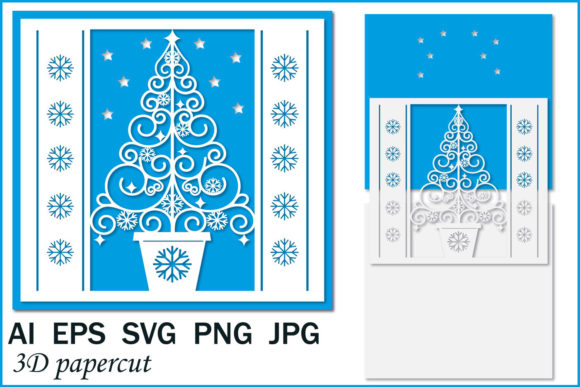
3D Postcard, Christmas Tree Graphics for Crafts
When I first pulled up the 3D Postcard, Christmas Tree asset to evaluate it for a client’s seasonal campaign, my immediate reaction was one of cautious optimism. As a designer who spends hours refining visual hierarchy and ensuring brand consistency, I don’t just look at whether an image is "pretty." I look at how it functions within a larger system. This particular design asset—a multi-layered 3D greeting card template featuring an openwork Christmas tree—carries a specific weight. It isn't just a flat icon; it suggests depth, texture, and a tactile quality that mimics handmade paper or cardboard construction.
The mood it creates is distinctly cozy yet structured. It speaks to the "handmade business" aesthetic that has dominated creative marketplaces like Etsy in recent years. For a small business owner launching a boutique holiday line, this graphic design asset offers a bridge between digital convenience and artisanal charm. However, before committing to its use in a real client project, we need to dissect how it performs across various applications, from brand identity work to high-volume print-on-demand products.
Visual Mood and Design Direction
The core strength of this SVG design lies in its representation of an openwork Christmas tree. The negative space is critical here. In modern design, whitespace is not empty; it is active. The intricate cutouts of the tree structure allow background colors or patterns to bleed through, creating a dynamic interplay of light and shadow even in a static file. This makes it an excellent choice for projects aiming for a sophisticated, editorial feel rather than a loud, cartoonish holiday vibe.
It naturally fits into themes centered around warmth, tradition, and craftsmanship. If your client is a local bakery offering holiday cookies, a boutique candle maker, or a stationery brand, this illustration aligns perfectly with their narrative. It evokes the feeling of a physical object you can hold, which is a powerful psychological trigger in marketing visuals. By using this digital product, you are borrowing that sense of tangibility for a screen-based or printed medium.
Practical Applications in Client Projects
In my workflow, versatility is key. Here is where I see this design bundle adding value to different types of commercial design work:
- Packaging Design: The layered aesthetic translates beautifully to box inserts, hang tags, and wrapping paper designs. The "handmade paper" look adds perceived value to physical goods, making them feel more premium in the hands of the consumer.
- Social Media Graphics: For Instagram posts and Pinterest pins, this clipart serves as a strong focal point. It breaks the monotony of solid-color backgrounds and draws the eye. It works particularly well for announcing limited-edition collections or holiday sales.
- Printable Wall Art: Since it mimics a 3D postcard, it lends itself well to framed art prints. The openwork details provide enough complexity to hold interest when viewed up close, satisfying the requirement for high-quality editorial design.
- Cricut Projects and Sticker Design: For crafters and Etsy sellers, this is a goldmine. The clean lines typical of vector files make it ideal for vinyl cutting. Whether used for t-shirt design, laptop decals, or window clings, the precision of the cutout areas ensures a professional finish without jagged edges.
- Invitations and Stationery: The title references a "greeting card," and rightly so. It is structurally perfect for save-the-dates, party invitations, or thank-you notes. The vertical orientation often associated with postcards provides a classic layout foundation.
Strategic Placement and Hierarchy
Not every placement is created equal. To maintain a polished look, you must understand where this asset thrives and where it struggles. This creative design element is best utilized in large layout areas or as a hero graphic. When scaled up, the intricate details of the openwork tree become apparent, rewarding the viewer with visual richness. It acts as a decorative accent that anchors a composition.
However, caution is required when dealing with small sizes or crowded layouts. At thumbnail dimensions, the delicate negative spaces may disappear, turning the tree into a muddy blob. Similarly, placing this complex shape over a busy background or a low-contrast design will destroy its visual impact. In minimalist branding or corporate materials where clean visual hierarchy is paramount, this asset might feel too ornate. It demands space to breathe. If your client’s brand relies on stark simplicity and heavy typography, this sublimation design might clash rather than complement.
Think about the emotional appeal. This asset builds trust through nostalgia and warmth. It signals to the audience that the brand cares about detail and aesthetics. But if placed poorly, it can also signal clutter. The key is balance. Use it to support the message, not overpower it.
Technical Considerations for Professional Use
Before integrating this design assets pack into a final deliverable, there are several technical checks every serious designer should perform. First, always test the asset in black and white. This reveals whether the shape holds up without the aid of color gradients or shadows. If the silhouette is weak, no amount of coloring will save it.
Check contrast rigorously. Preview the PNG design version on both light and dark backgrounds to ensure the transparency handles edge anti-aliasing correctly. Look for halos or jagged pixels around the intricate cutouts. If you are using the vector version, inspect the paths for unnecessary anchor points that could cause issues during printing or cutting.
Typography pairing is another crucial step. This organic, textured illustration pairs well with serif fonts that evoke tradition, or handwritten fonts that enhance the handmade feel. However, be careful with overly decorative display fonts that compete for attention. A clean sans-serif font can sometimes provide the necessary modern counterpoint to balance the vintage charm of the tree.
Finally, confirm commercial licensing. Even if the asset is affordable, verify that it allows for use in client projects and end-product sales. Distinguish between personal use licenses and those suitable for small business branding. Ensure you have the right to modify the file for customization, such as changing colors to match a specific brand palette.
Final Verdict
The 3D Postcard, Christmas Tree is more than just a festive clipart; it is a versatile tool for elevating seasonal campaigns. Its ability to mimic physical craftsmanship makes it a valuable addition to any designer’s toolkit for crafts and graphics focused on the holidays. When used with intention—respecting its scale, background, and typographic context—it delivers a high-end, emotionally resonant result that clients and customers alike will appreciate. For anyone looking to add a touch of refined holiday spirit to their web design or print materials, this asset is a strong contender.