Alaska, 3D Layered Tropical Alaska: A Practical Review for Shadow Boxes and 3D SVG Sellers
When I sit down to evaluate a new graphic design asset for my online shop, I am not looking for just another pretty image. I am looking for versatility, commercial viability, and clear instructions. Recently, I came across Alaska, 3D Layered Tropical Alaska, a file marketed as a project for CNC and plywood cutting. While the description highlights its technical roots as a vector drawing suitable for laser cutting, my eyes immediately went to how this could translate into profitable digital products for Etsy, Creative Fabrica, and print-on-demand platforms.
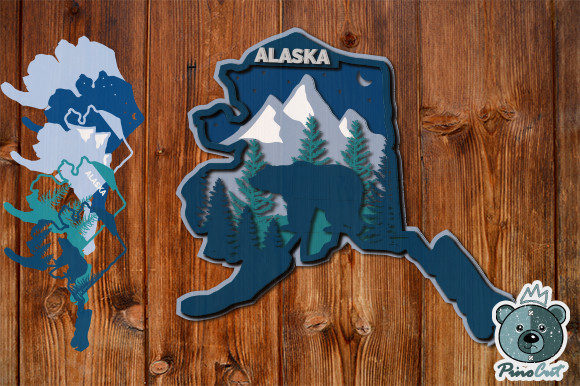
The initial impression is one of structural elegance. The concept of a layered tropical theme within an Alaskan context creates a unique visual tension that can work well for niche audiences. It feels modern yet rustic, appealing to those who appreciate both nature and clean geometric lines. For sellers of shadow boxes or 3D SVG files, this asset offers a ready-made blueprint for depth and dimension without requiring you to build every layer from scratch.
Evaluating the Niche Appeal and Visual Personality
Before committing to a product listing, I always ask: Who is this for? The Alaska, 3D Layered Tropical Alaska design strikes a balance between playful and premium. It is not overly cute, nor is it strictly corporate. Instead, it leans toward decorative and handmade aesthetics. This makes it highly attractive to crafters looking for statement pieces for their homes or businesses.
The tropical elements suggest warmth and vacation vibes, while the "Alaska" title grounds it in a specific geographic identity. This duality allows for creative marketing angles. You can position it as a "Tropical Winter" collection item, a unique gift for travelers, or a bold accent piece for modern interior decor. The visual personality is strong enough to stand alone but flexible enough to be paired with other elements. For small business branding, this kind of distinct imagery helps create a memorable brand identity that stands out in crowded marketplaces.
Real-World Application: From Vector File to Sellable Product
As a digital product creator, my goal is to maximize the utility of each asset. Here is how I plan to test Alaska, 3D Layered Tropical Alaska across different product categories before publishing any listings.
- Shadow Boxes and 3D SVGs: Since the source material is designed for CNC and plywood, the layering structure is likely precise. I will convert these layers into a high-quality 3D SVG. This allows users to cut the design themselves using Cricut or Silhouette machines. These are high-value items for crafters who want to create physical decor without needing professional woodworking skills.
- Printable Wall Art: Even if the user does not have a cutting machine, the layered effect can be simulated in Photoshop or Canva. I will create printable PDF versions where customers can assemble the layers manually. This expands the market to include people who prefer traditional crafting methods.
- Mug and Tumbler Designs: For sublimation, I will extract the central motifs. The tropical leaves or geometric shapes can be isolated and placed on tumbler wraps or mugs. However, I must ensure the resolution is sufficient for large-format printing to avoid pixelation.
- Sticker Design Bundles: Individual elements from the design can be turned into die-cut sticker packs. Stickers are low-cost impulse buys that drive traffic to a shop. I will check the fine details to ensure they remain legible when scaled down to 2x2 inches.
- Canva Templates: I will incorporate the design into social media graphics or blog headers. This appeals to content creators who need consistent visual assets. By offering a template where the user can swap colors or text, I add value beyond the static image.
Product Presentation and Mockup Strategy
A great design can fail if it is presented poorly. When preparing the listing images for Alaska, 3D Layered Tropical Alaska, I focus on visual hierarchy and context. Static images of the vector file do not sell; lifestyle mockups do.
I will create mockups showing the design assembled as a shadow box hanging in a modern living room. This helps the buyer visualize the final product, increasing perceived value. I will also show flat-lay photos of the individual layers to demonstrate the complexity and quality of the cut lines. Thumbnail appeal is critical; the main image must clearly show the depth and color contrast of the design. If the background is too busy, the product gets lost. I prefer using white or soft neutral backgrounds for the primary listing photo to ensure the design pops.
For digital downloads, clarity is key. I will include a "How It Works" guide in the listing description, explaining how to use the vector cutting plan. This reduces customer support questions and builds trust. Showing the design on various materials—such as wood, vinyl, or cardstock—helps buyers understand the versatility of the asset.
Where the Asset Shines and Where to Be Careful
This design works best in contexts that highlight its dimensional qualities. Large product previews, themed bundles (like a "Nature Lovers" collection), and decorative layouts are ideal. It is perfect for merchandise graphics where the design serves as a focal point, such as on tote bags or nursery prints. Social media promos benefit from the bold, structured look, making them eye-catching in a feed.
However, there are risks. I must be careful with tiny sticker details. If the vector paths are too intricate at a small scale, the cuts may bleed together, especially for beginners using home cutting machines. Overly complex layouts might overwhelm users who are new to design software. I will test the SVG by simplifying some layers to see if the overall aesthetic holds up. Low-resolution print products should be avoided unless I have access to high-DPI source files. Additionally, dark backgrounds can sometimes obscure the subtleties of a layered design, so I will test contrast carefully.
Practical Seller Notes for Success
To ensure Alaska, 3D Layered Tropical Alaska performs well in my shop, I will follow a strict testing protocol:
- Mockup Testing: I will place the design on at least five different mockups (wood, metal, paper, fabric) to check for compatibility.
- Background Contrast: I will preview the asset on both white and dark backgrounds to ensure visibility and adjust opacity if necessary.
- File Organization: All files will be archived clearly. Customers expect organized folders containing SVG, PNG, and PDF versions. I will label them intuitively (e.g., "Layer_01", "Layer_02").
- Font Pairing: To create complete designs, I will pair the graphic with complementary fonts. A serif font adds elegance, while a sans-serif font keeps it modern. Script fonts can add a personal touch for greeting cards.
- Commercial License Verification: Before selling any finished products, I will double-check the commercial license terms. Some vector assets restrict the number of physical copies sold or require attribution.
- Resolution Check: I will verify that all PNG exports are at least 300 DPI for print-ready products and scalable vectors for cutting machines.
Ultimately, Alaska, 3D Layered Tropical Alaska is more than just a vector drawing; it is a versatile foundation for a range of creative projects. By approaching it with a business mindset—testing rigorously, presenting professionally, and respecting licensing—I can turn this single asset into multiple revenue streams. Whether used for a Cricut project, a printable wall art bundle, or a print-on-demand t-shirt design, the key is to highlight its unique layered beauty while providing clear, actionable value to the buyer.
For designers and creative entrepreneurs, the opportunity lies in adaptation. Do not just sell the file; sell the solution. Show your customers how easy it is to bring this tropical-alpine vision to life. With careful preparation, this design can become a staple in your digital product catalog, supporting your growth in the competitive world of online sales.