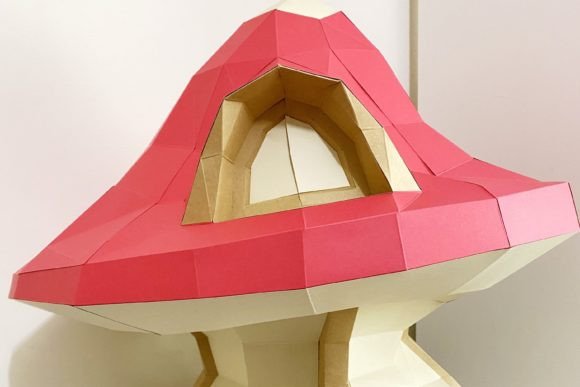
Mushroom House 3D Paper Toy Embroidery Review
As a designer who spends half the day staring at stitch charts and the other half trying to explain to clients why their logo won’t fit in a four-inch hoop, I approach every new machine embroidery design with a mix of skepticism and hope. We are constantly looking for that sweet spot between whimsical charm and technical viability. Today, I am putting the spotlight on the Mushroom House 3D Paper Toy, a file created by Sofs Design that promises a bit of fantasy in your stitching projects. But does it hold up when you pull the threads through actual fabric, or is it just another pretty picture that falls apart under the needle?
First Impressions: Whimsy Meets Structure
The moment you load the Mushroom House 3D Paper Toy into your digitizing software, the visual personality jumps out at you. It isn’t just a flat mushroom; the "3D Paper Toy" aspect suggests depth, layering, and a tactile quality that is rare in standard embroidery files. The mood is undeniably cozy and nostalgic, leaning heavily into the cottagecore aesthetic that has dominated social media feeds for years. For an Etsy seller or a small shop product creator, this is gold. It feels like something a child would draw if they had access to high-quality craft supplies.
From a layout perspective, the design balances organic curves with structured elements. This is crucial because pure organic shapes can sometimes look messy if not anchored by clear lines. The mushroom cap provides a bold focal point, while the stem and base offer stability. It creates a natural hierarchy in the eye, which translates well to custom apparel where you want the viewer’s attention to land immediately. However, the "paper toy" concept implies folds and shadows. In embroidery, we have to translate those paper folds into thread textures. My initial thought is that this design relies heavily on how well the stitch density mimics the crispness of folded paper.
Real-World Application: Where Does This Belong?
I don’t believe in designs that only live on a screen. To truly evaluate the Mushroom House 3D Paper Toy, I had to imagine it stitched onto physical goods. Let’s talk about practical use cases. This design screams handmade product potential. It fits perfectly into the nursery decor market. Imagine this stitched onto a cream-colored muslin swaddle or a soft cotton onesie. The contrast between the playful subject matter and the delicate nature of baby clothes creates an emotional connection that drives sales.
Beyond baby items, this is a strong candidate for a tote bag design. A canvas tote featuring this mushroom house would feel like a statement piece for a book lover or a gardener. It’s quirky enough to stand out but simple enough to wear daily. I also see potential here for sweatshirt embroidery. Placed over the heart or centered on the back, it adds a touch of personality without being overwhelming. For the craft business owner, this versatility is key. You aren’t locked into one niche; you can pivot from holiday gifts to spring fashion using the same core asset.
Consider the personalized gift angle. Because the design has a distinct shape, it works beautifully as an embroidered patch that could be sewn onto denim jackets or backpacks. The "3D" aspect might lend itself well to appliqué techniques, where you layer fabrics to create the mushroom’s volume before adding the satin stitch borders. This elevates the finished product from a basic machine stitch to a textured art piece, justifying a higher price point in your boutique branding.
Technical Challenges and Fabric Considerations
Now, let’s get practical. Not every surface is created equal, and the Mushroom House 3D Paper Toy will behave differently depending on what you put under the needle. If you are planning to use this on a curved surface like a cap or a hat, you need to be cautious. The design likely has some width to it. If the hoop size is too large for a standard six-inch cap frame, you may run into alignment issues or puckering. Always confirm the hoop size requirements before committing to a production run.
Fabric texture plays a massive role in how this design reads. On a smooth, tight-weave cotton, the details will pop. But if you try to stitch this on a chunky knit or a highly textured linen, the fine details—especially those representing the paper folds—might get lost. In such cases, the design might look muddy rather than crisp. Similarly, dark fabrics require careful thread color selection. If the design includes small white or light-colored accents, you might need to add a cut-away stabilizer underneath to prevent show-through, which can ruin the clean look of the final piece.
Another area requiring care is the stitch density. If the original digitization packs too many stitches into a small area, the fabric can pucker, especially on stretchy materials like jersey knits used for custom apparel. Conversely, if the fill areas are too sparse, the backing material might peek through, giving a cheap appearance. I always recommend inspecting the design in a black-and-white mockup first. This helps you see the true value range and ensures that the lighter threads will still be visible against darker backgrounds.
Designer’s Checklist for Success
- Test on Scrap: Never trust a design until it has been stitched on the exact fabric you plan to sell. Use scrap pieces to check tension and stability.
- Check Thread Contrast: Ensure the thread colors chosen provide enough contrast against your base fabric. Low contrast can make the design disappear.
- Review Small Details: Zoom in on the digitizing software. Are there any tiny running stitches that might break during trimming? These fragile points often fail in real-world washing.
- Stabilizer Strategy: For items like kitchen towels or aprons that face frequent washing, a tear-away stabilizer might not be enough. Consider a wash-away or cut-away option for longevity.
- Licensing Verification: Before listing this as a commercial embroidery item or selling digital downloads, double-check the license terms provided by Sofs Design. Some templates allow personal use only, which can lead to legal headaches if ignored.
Final Verdict: A Strong Contender for Creative Entrepreneurs
The Mushroom House 3D Paper Toy is more than just a cute image; it is a versatile tool for the modern digital product seller. Its charm lies in its ability to bridge the gap between traditional crafting and modern digital aesthetics. It works exceptionally well for holiday embroidery projects, particularly around autumn and winter holidays when cozy themes are in high demand.
For the apparel decorator or maker, this design offers a chance to create unique, conversation-starting pieces. It doesn’t scream for attention in a loud way; instead, it invites the viewer to look closer, appreciating the simulated paper layers and thoughtful composition. As long as you respect the technical limitations of your fabric and hoop, and ensure your digitizing settings are optimized for clarity, this design can elevate your finished product significantly.
In a market saturated with generic floral patterns and basic logos, offering something with narrative depth like a mushroom house gives your brand a distinct voice. It signals to customers that you care about detail and theme, not just filling space. Whether you are creating a single personalized gift for a friend or building a line of design assets for your online store, the Mushroom House 3D Paper Toy proves that even simple shapes can tell complex stories when stitched with intention. Just remember to test thoroughly, choose your threads wisely, and let the craftsmanship speak for itself.